

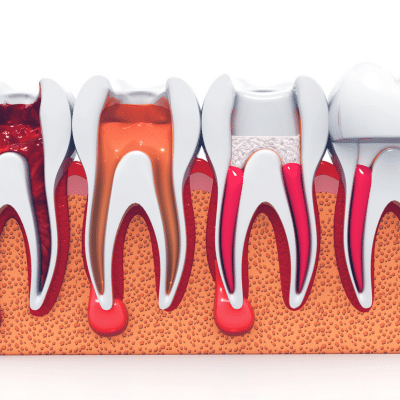
What is a Root Canal?
A root canal is a dental treatment designed to address infection or damage within the pulp of a tooth. The pulp is the inner layer of a tooth, made up of soft tissue that houses nerves, blood vessels and connective fibers. When this tissue becomes infected due to deep decay, repeated dental procedures, a crack or chip, or trauma, it can lead to pain, abscesses and even tooth loss if left untreated. A root canal involves removing the infected pulp, cleaning the tooth’s inner chambers and sealing it to prevent future infections. This procedure allows you to save the tooth and avoid an extraction.
Why Do You Need One?
Root canals are often necessary when a tooth becomes infected or damaged to the point that other treatments, like fillings or crowns, are no longer sufficient. Some common reasons why you may need one include:
- Deep Decay: When a cavity extends into the pulp, causing infection or damage.
- Repeated Dental Procedures: Multiple fillings or other treatments can weaken a tooth, making it prone to internal damage that requires a root canal.
- Cracked or Chipped Teeth: Damage to a tooth that exposes the pulp can lead to infection and requires this procedure.
- Trauma: An injury or accident can damage the pulp, causing pain and the need for the procedure to save the tooth.
By opting for a root canal, you can preserve your tooth and avoid the need for more complex procedures like tooth extraction.
What Happens During the Treatment?
A root canal is a standard, safe and effective procedure that is typically performed in one or two visits. Here’s what you can expect during the treatment:
- Anesthesia: To ensure you are comfortable and pain-free, local anesthesia is administered to numb the affected tooth and surrounding area. You will remain fully conscious during the procedure, but it will be entirely pain-free.
- Accessing the Pulp: Your dentist or endodontist will make a small opening in the crown of the tooth to access the pulp and root canals. This allows them to remove the infected tissue.
- Cleaning and Shaping: The pulp is carefully removed, and the root canals are cleaned and shaped to eliminate bacteria and debris. This step ensures that the canal is free of infection and prepares it for filling.
- Filling: After the canals are cleaned and shaped, they are filled with a special biocompatible material that seals the tooth to prevent further infection.
- Restoration: In most cases, a crown is placed over the treated tooth to restore its function and protect it from further damage. You will typically return for a follow-up visit to have the crown placed.
The Benefits of Root Canals
Although the thought of this treatment may seem intimidating, the procedure offers many benefits that contribute to your overall oral health:
- Pain Relief: One of the primary reasons for this procedure is to relieve the pain caused by an infected tooth. The procedure eliminates the infection, leading to significant pain relief.
- Tooth Preservation: Root canals allow us to save your natural tooth, preventing the need for an extraction and preserving the structure of your smile.
- Prevention of Further Infections: By removing the infection and sealing the tooth, this procedure help prevent the spread of bacteria to other teeth and parts of your body.
When you choose root canal therapy, you’re taking an important step toward long-term dental health and comfort.
Frequently Asked Questions
We understand that you might have questions or concerns before undergoing a root canal. Here are answers to some frequently asked questions:
How long does the procedure take?
Root canal treatment typically takes between 60 and 90 minutes, depending on the complexity of the case.
How long is the recovery process?
Recovery is usually quick. Most patients experience mild discomfort or soreness for a few days to a week after the procedure.
Is the procedure painful?
Thanks to local anesthesia, you should feel no pain during the procedure. Some mild discomfort may occur afterward, but pain medication and following your post-operative care instructions should help manage it effectively.
After the Procedure: What to Expect
Following your root canal, you may experience some mild discomfort or soreness in the treated area, but this is usually temporary. You can manage any discomfort with over-the-counter pain medication, and it should subside within a few days. Following your dentist’s post-procedure instructions is crucial for a seamless and effective recovery. Your dentist may recommend avoiding chewing on the treated tooth until it has been completely restored with a crown.
Contact Marc A. Minch, DMD Today: Request Your Appointment in Boynton Beach, FL Today!
At Marc A. Minch, DMD, we proudly serve families in the Palm Beach County. We understand that undergoing a root canal may feel daunting, but it’s a common and effective procedure for saving a damaged or infected tooth. Our team is committed to providing you with the best care, ensuring you are comfortable and informed throughout the entire process. If you think you may need a root canal or have any questions, don’t hesitate to reach out. We’re here to help. Request your appointment online or give us a call at (561) 732-1777 today!