Oral surgery

Oral Surgery

Expert Care When You Need It The Most

Performing minor oral surgery procedures in dentistry will oftentimes help make a diagnosis and/or improve health outcomes for the patient. At Marc A. Minch, DMD, we believe that oral diseases or acute dental problems can affect overall health and well-being, which is why we treat each patient using a health-centered approach. We can perform extractions in the office as well as bone grafts and laser biopsies of suspicious tissues that may require further investigation.

Common Minor Oral Surgery Procedures in Southeast, FL

Minor oral surgery procedures in dentistry encompass a range of surgical interventions that are typically performed in our dental office under local anesthesia. These procedures usually include:

  • Tooth extractions
  • Biopsy and treatment of minor oral pathologies like cysts, benign tumors or lesions
  • Bone grafting to prepare for dental implants

What Are Extractions?

A dental extraction is often a necessary procedure when a tooth is too damaged or decayed to be saved through restorative treatments like fillings or crowns. Extractions may also be required for impacted teeth, such as wisdom teeth, or to make space for orthodontic treatment. While extractions are often a last resort, they can play a vital role in maintaining overall oral health when preservation of the tooth is not possible. The procedure involves the careful removal of a tooth from its socket in the bone, and it can vary in complexity depending on the tooth’s position, condition and the patient’s overall health.

Reasons For Extractions

Our goal at Marc A. Minch, DMD is to help you maintain excellent oral health, and on the occasion that you have a dental problem, we can help restore your oral health. We view your oral health as one part of a whole system that works together to keep you healthy throughout life. As we all know, life can throw unpredictable curve balls, and dental problems or oral injuries that may need oral surgery can pop up when you least expect them. Our team is here to help you through it calmly and comfortably, whenever it may happen. Here are a few of the most common reasons that a tooth may need to be extracted:

  • Severe Tooth Decay – When a tooth is extensively decayed and restoration is not possible, extraction may be necessary to prevent infection and further complications.

  • Gum Disease – Advanced periodontal disease can lead to the loosening of teeth. This process may mean you need an extraction to protect the surrounding teeth and tissues.

  • Impacted Teeth – Teeth that are trapped in the jawbone, such as impacted wisdom teeth, may need to be surgically extracted to prevent pain, infection or damage to adjacent teeth.

  • Overcrowding – In cases where there is insufficient space in the mouth, teeth may be extracted to create room for orthodontic treatment, such as braces. We try to use conservative measures to avoid extracting permanent teeth in young patients, but on the rare occasion, it is necessary.

  • Infection Or Abscess – A tooth that has developed an infection or abscess that cannot be treated effectively with root canal therapy may require extraction to prevent the spread of infection.

  • Trauma Or Injury – Teeth that are severely damaged due to trauma or injury, and cannot be repaired, may need to be extracted.

  • Preparation For Dentures Or Implants – In some cases, teeth may need to be removed to prepare the mouth for dentures or dental implants.

The Extraction Procedure

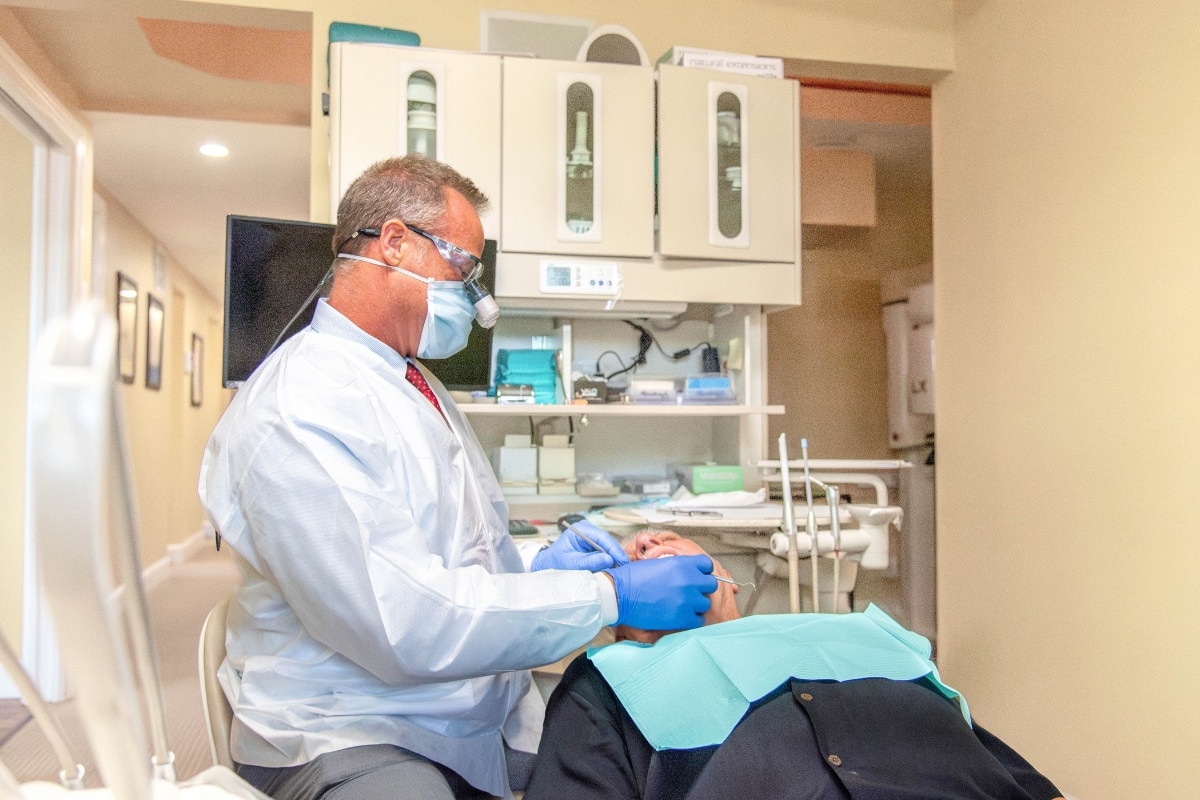
Before the extraction, Dr. Minch or Dr. Newton will thoroughly evaluate the tooth and surrounding structures through clinical examination and imaging, such as X-rays, to plan the procedure. Local anesthesia is administered to numb the area, ensuring our patient’s comfort. Simple extractions, typically for visible teeth, involve loosening the tooth and then removing it with forceps. Surgical extractions, necessary for teeth that are broken, impacted or below the gum line, may require an incision in the gum and, occasionally, bone removal.

The Dangers Of Bone Loss

Bone loss, or deterioration in the jaw bone, is typically caused by gum disease. If left untreated, bone loss can lead to tooth loss and cause your existing teeth to shift. As tooth loss occurs, so does the deterioration of the jaw bone. Over time, this can lead to serious problems such as:

  • Movement Of Existing Teeth

  • Further Tooth Loss

  • Change In Jaw Shape

  • Bite Changes

  • Facial Sinking

Bone Grafting

Bone grafting is a procedure that involves adding bone tissue to the jaw to increase volume and density. Bone grafting can be used to address bone loss caused by gum disease to ultimately improve the bite, improve facial symmetry and aesthetics, or to prepare the mouth for dentures or implants. The procedure is relatively minimal and performed under a local aesthetic. At Marc A. Minch, DMD, we may recommend bone grafting for the following reasons:

  • Implant Preparation: Bone grafting preserves and strengthens extraction sites for future implants.

  • Ridge Preservation For Partial And Full Dentures: The bone grafting procedure helps rebuild the jaw bone before getting dentures, ensuring proper support.

Laser Biopsy

At Marc A. Minch, DMD, we are dedicated to using the most advanced technology for our patients, including minimally invasive laser treatments from the comfort of our office. Using our Fotona laser, we perform laser biopsies to remove lesions of the mouth, using only a topical anesthesia for smaller lesions. The laser allows our dentists to remove the lesion with the utmost precision, while preserving the healthy tissue around it. The laser promotes quick healing, minimal pain and discomfort and requires no stitches and leaves no scarring. After the procedure, the lesion will be biopsied in order to reach a diagnosis. Fortunately, most oral lesions are benign!

Oral Surgery Aftercare Instructions

If you have an extraction or other oral surgery procedure, our team will provide you with detailed aftercare instructions to follow so that you can heal properly and completely with the least amount of discomfort. The instructions will also include guidelines on diet, oral hygiene and activity restrictions. Post-extraction care is crucial for healing and includes managing pain, preventing infection and ensuring proper clot formation. If you have any questions or concerns after a procedure, please call our office at (561) 732-1777.

Couple with healthy teeth smiling on beach

Health-Centered Dental Care

In Southeast Florida

We are proud to provide compassionate and personalized care with a gentle touch. Dr. Minch, Dr. Newton and our team use a health-centered and prevention-based approach to give you a healthy smile with an emphasis on sleep health.